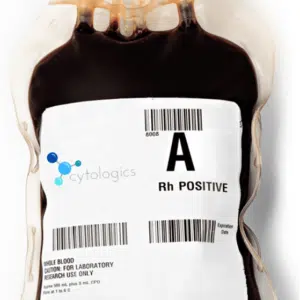

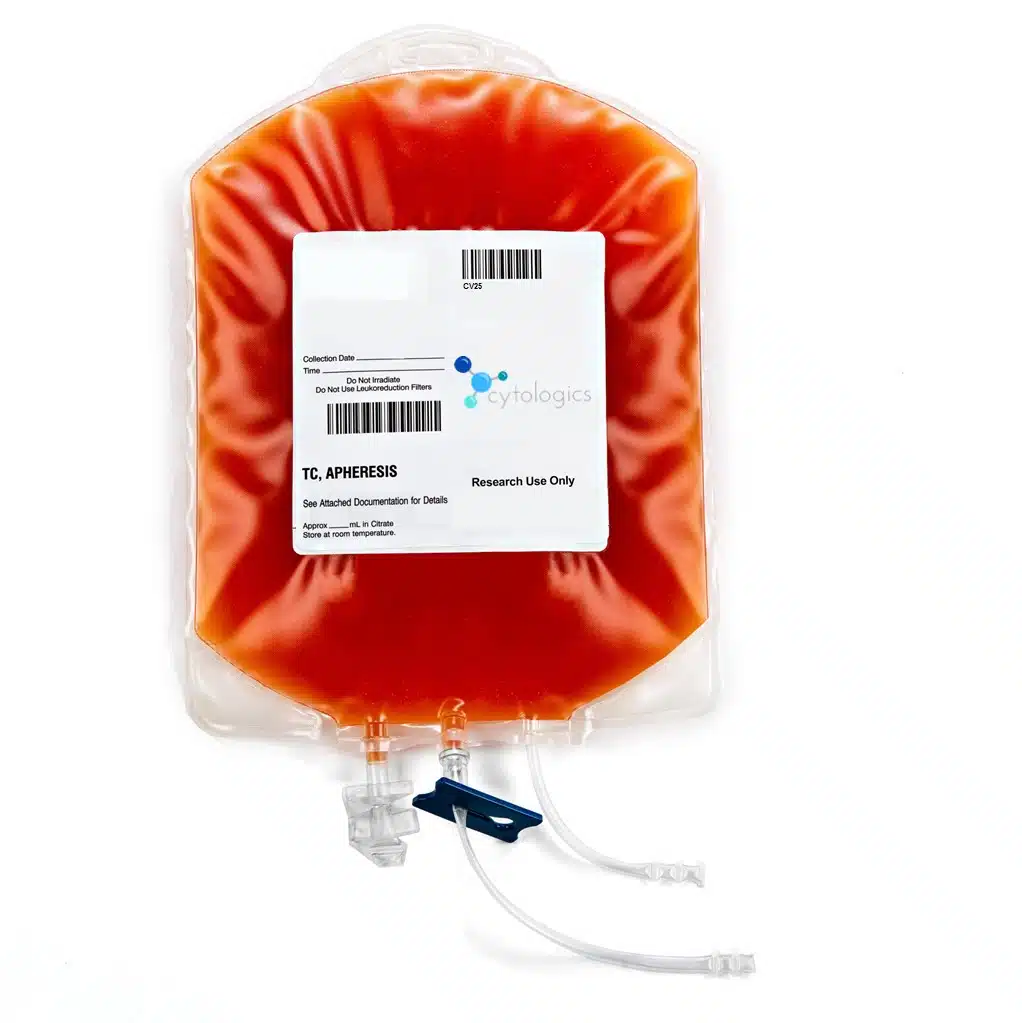
Human Leukopak, Fresh
Product Overview
A leukopak is an enriched leukapheresis product collected from peripheral blood. It contains a high concentration of peripheral blood mononuclear cells (PBMCs) – which consists of T cells, B cells, NK cells and monocytes. A leukopak contains more leukocytes as compared to standard venipuncture collection methods or buffy coat products.
Leukapheresis Technology and Process
Leukopaks are collected from IRB consented healthy human donors by leukapheresis using the Spectra Optia® Apheresis System CMNC collection protocol in ACD-A anticoagulant.
Leukapheresis is an automated method for collecting mononuclear cells which allows the collection of:
- Different amounts of cells (1/2 leukopaks or full leukopaks)
- Different amounts of plasma either within the plasma bag or the collection bag
For all Leukopaks, multiple lab testing analyses are performed. The parameters included in the testing are:
- Viral testing (following requirements of FDA)
- Blood count analysis for: the total amount of hemoglobin, whole blood cell count, platelet count, lymphocyte count and monocyte count
Leukopak Source
Our leukopaks are collected at FDA-licensed donor centers and each donor is tested for the standard FDA viral markers and found negative Anti-HIV Ag/Ab, HBsAg, Anti-HCV, HTLV I/II, Treponema Pallidum Antibodies, Anti-HBc, Atypical Antibody, HIV-1 RNA/HBV DNA/HCV RNA, West Nile Virus RNA and Chagas.
Biospecimens are obtained from properly consented donors. We conform to HIPAA standards to protect the privacy of the donor’s personal health information.
Product Storage
Use leukopak product immediately or store for up to 24 hours. Customers may select that product be shipped at ambient temperature or chilled between 2⁰C-8⁰C. It is recommended to warm the product to room temperature for 30-60 minutes before further processing.
Human Material Precaution
It is best to use caution when handling human blood. We recommend all biospecimens should be handled as if potentially infectious following biosafety level 2 procedures.
Even with infectious virus assays or viral antigen assays, a negative test result may leave open the possible existence of latent viruses.